The Importance of Precision Fit in Fine Jewelry
Selecting the ideal dimensions for fine jewelry is essential for all-day comfort, structural security, and visual balance. A ring that fits correctly stays centered so its gemstone faces the light without rotating, while proper chain drape ensures layered necklaces rest flat against the chest without tangling.
Fortunately, determining your exact dimensions does not require a trip to a jeweler. Using simple household items like paper strips, flexible measuring tape, and a standard millimeter ruler, you can determine your standard US sizing accurately from home before completing checkout.
This comprehensive guide walks you through easy measuring methods for rings, chains, and bracelets, complete with standard sizing charts to ensure a confident first-time order.
1. Official US Ring Size Conversion Chart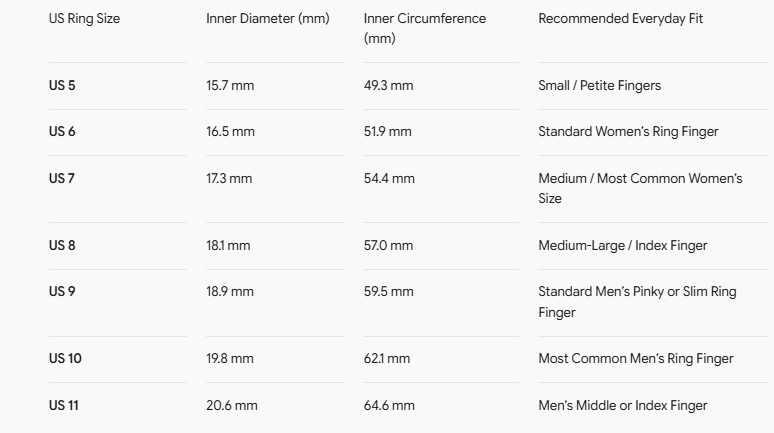
2. The 3-Step Paper Strip Ring Measurement
If you do not have an existing ring to measure, use this reliable household paper method:
- Step 1: Cut and Position. Cut a narrow, non-stretchy strip of paper approximately 1/2 inch wide and 4 inches long. Wrap the strip snugly around the base of the specific finger you plan to wear the ring on.
- Step 2: Mark the Overlap. With a fine-tipped pen, mark the precise point where the end of the paper strip overlaps to form a complete circle. Make sure the strip fits comfortably snug without digging into the skin.
- Step 3: Measure the Millimeters. Lay the paper strip flat against a rigid ruler. Measure the exact distance from the starting edge to your pen mark in millimeters to find your finger’s Inner Circumference. Match that measurement against the conversion chart above to find your US size.
Pro Measuring Tips:
- Knuckle Consideration: If your knuckle is significantly wider than the base of your finger, measure both the base and the knuckle, then choose a size halfway between them so the ring slides over smoothly.
- Time of Day: Measure your fingers in the late afternoon at normal room temperature. Fingers are naturally slightly smaller in the morning or when exposed to cold temperatures.
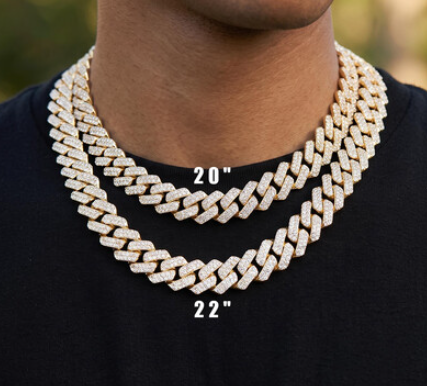
3. Chain Length & Drape Placement Guide
Necklace drape varies depending on neck circumference, chest build, and link profile. Here is how standard lengths fall on most body types:
- 18 Inches (45 cm) – Collarbone Drape: Sits neatly right at or just below the collarbone. This is the classic, versatile length for solitary stone pendants, delicate chains, and standard 3mm to 4mm certified moissanite tennis necklaces.
20 Inches (50 cm) – Upper Chest: Falls a couple of inches beneath the collarbone. Ideal for mid-weight chains and serving as the anchor base when layering necklaces.
22 to 24 Inches (55–60 cm) – Mid-to-Lower Chest: Extends comfortably over crewneck collars, hoodies, and jackets. Excellent for holding statement pendants, dog tags, or heavier 6mm to 8mm solid silver Cuban links. Review our chain layering and styling guide for tips on building multi-chain stacks.
4. How to Measure Your Wrist for Bracelets
A proper bracelet fit ensures the piece rests naturally along the forearm without sliding off the hand or pinching the skin:
- Step 1: Measure Wrist Circumference. Wrap a flexible measuring tape directly around your wrist bone where you normally wear a watch or bracelet.
- Step 2: Add Movement Allowance.
- For Prong-Set Tennis Bracelets: Add 25 to 0.5 inches (0.6–1.2 cm) to your measurement. Tennis bracelets should fit relatively close to the skin so the stones face upright and do not flip.
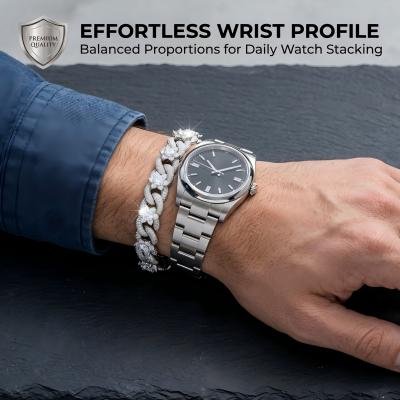
- For Solid Cuban Link Bracelets: Add 5 to 0.75 inches (1.2–1.9 cm) to your measurement. The extra room allows the heavier metal links to drape fluidly as your hand moves.
All our bracelets are crafted with solid 925 sterling silver mountings and secure double-latch safety clasps, ensuring comfortable, skin-safe wear throughout the day. To learn more about our hypoallergenic metal standards, check our solid 925 sterling silver guide.
5. Frequently Asked Questions (FAQ)
Q: What if I am between two ring sizes?
A: If your measurement falls between two standard US sizes, we recommend sizing up to the larger size. A slightly loose ring can easily be fitted with a discrete silicone sizer, whereas a tight ring can cause discomfort during warmer months when hands naturally swell.
Q: Are wider bands measured the same as thin bands?
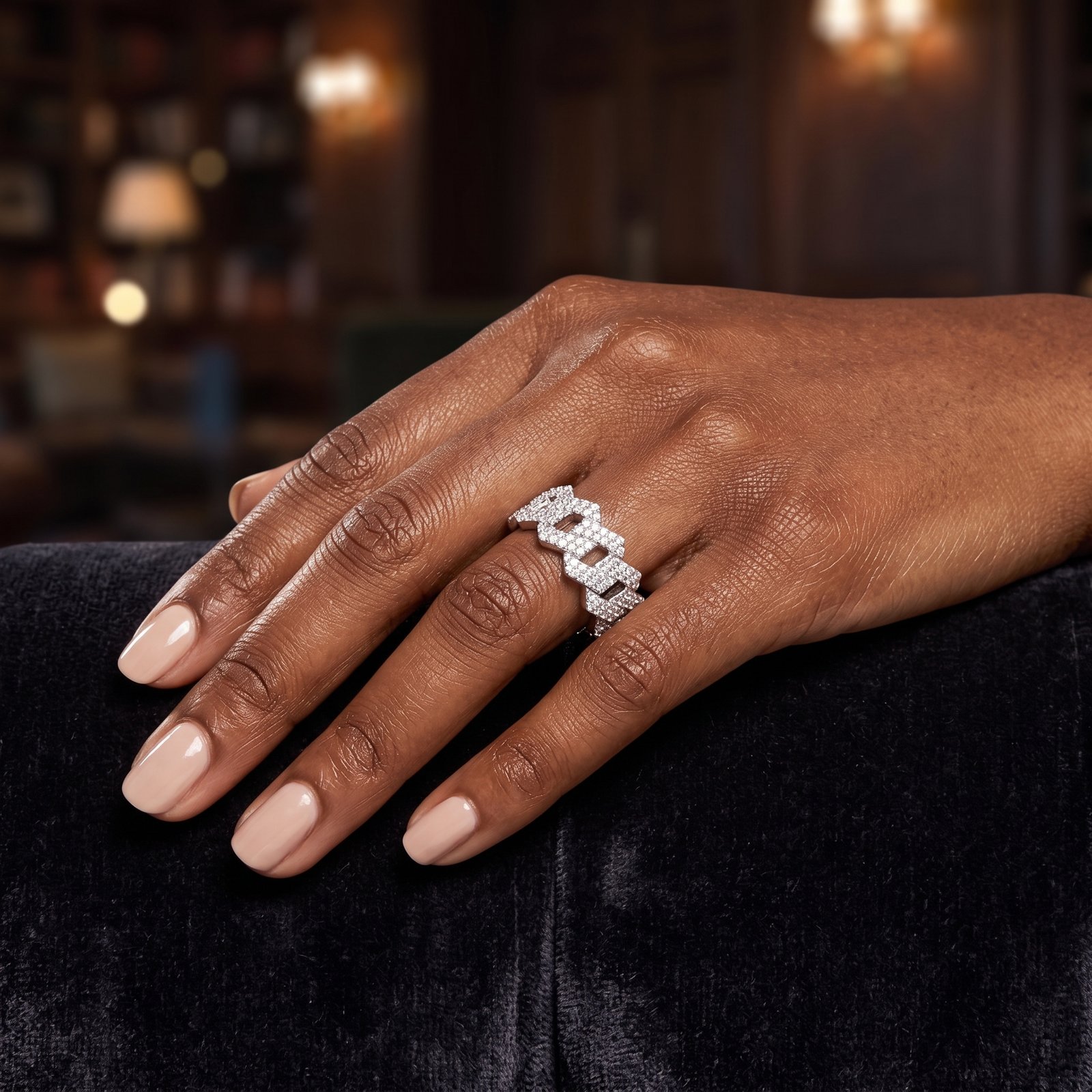
A: Wide ring bands (over 6mm in band width) cover more skin surface and naturally feel tighter than thin bands. If ordering a wide Cuban link ring or multi-row band, consider sizing up by a half or full size for optimal comfort.
Q: Can solid 925 silver tennis bracelets be adjusted?
A: Because stone tennis bracelets feature continuous hand-set stone baskets, they are manufactured in standard lengths (such as 7-inch and 8-inch options). Measuring your wrist carefully before checkout ensures your bracelet sits with the ideal balance of slide and security.
6. Shop with Confidence
Finding the right fit gives you the confidence to wear your favorite jewelry every single day. By combining precise sizing measurements with our lab-certified moissanite and solid 925 silver craftsmanship, you can build an enduring jewelry rotation crafted specifically for your personal style.
Explore our full range of rings, chains, and bracelets in our handcrafted moissanite jewelry collection to find your tailored piece.